


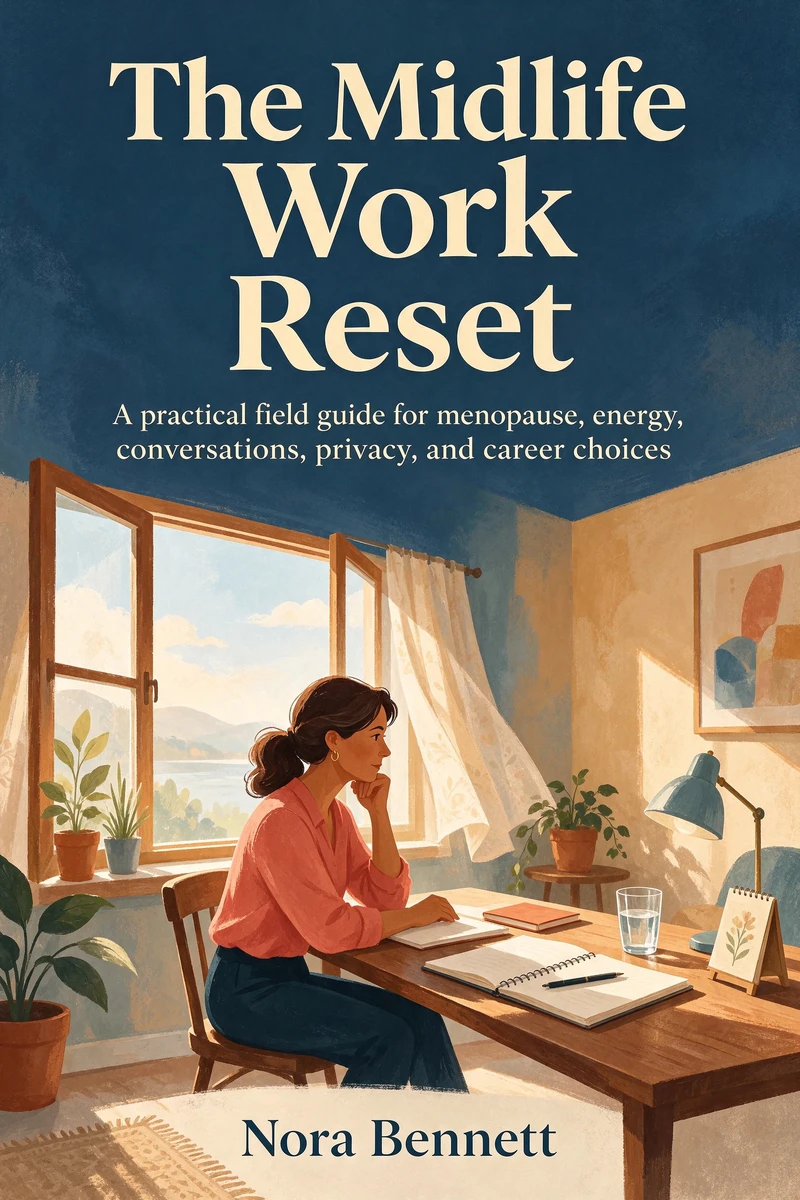
The Midlife Work Reset
- Audiobook
From $6.49 (audiobook)
Coming soon
54 pages · 1h 42m
Listen to the audiobook
Ebook coming soon.
About this book
AI-generated — text and cover. A clear, work-centred guide for women dealing with menopause while building, changing, or protecting a career. The Midlife Work Reset helps you turn a vague sense that work has become harder into a practical plan. Learn how to describe a work barrier, choose what to disclose, ask for a defined adjustment, protect concentration and energy, read workplace policies, and assess whether a role can be repaired or needs to change. You will get ready-to-use scripts, a two-week work map, meeting and concentration tools, privacy questions, jurisdiction-aware legal cautions, a 30-day action plan, and a manager and ally section. The book does not diagnose, prescribe, promise a workplace right that may not exist in your country, or ask you to share intimate medical details. It is a field guide for the next conversation and the next decision. For general educational purposes only; not medical, clinical, or legal advice.
This book was AI-generated and editorially reviewed.
This book was generated with AI and is general information, not financial, medical or psychological advice. The author name is a pen name and does not indicate professional credentials. Results are not guaranteed. Consult a qualified professional before acting on it.
Read an excerpt
From 1. The work problem is real, even when the cause is private — the opening of the book.
You are halfway through a meeting when heat rises under your collar. The room is too warm, the slide on the screen has blurred into a block of pale text, and you have lost the sentence you were about to say. Someone asks whether you have anything to add. You do. You know you do. The thought is there, but it will not come out in the right order.
Later, you replay the meeting. You wonder if anyone noticed. Then you open your calendar and see tomorrow’s early call, the presentation after lunch, and the trip next week. The problem is no longer one hot flush or one sleepless night. It is the extra work of trying to stay legible while your body is doing something you did not schedule.
This book starts with work because work has its own pressures, language, and power. Menopause can affect sleep, comfort, mood, concentration, confidence, and the ability to get through an ordinary shift. The World Health Organization describes menopause as one point in a longer life stage and says experiences vary substantially. Some people have few symptoms; for others, symptoms affect daily activity and quality of life [1]. That variation matters. You do not need to prove that your experience is severe enough to deserve a practical adjustment, and you do not need to adopt someone else’s label to explain what you need.
The word menopause is often used loosely. Perimenopause is the transition before the final menstrual period and can last several years. Natural menopause is generally defined after twelve consecutive months without menstruation when there is no other obvious cause [1]. Medical or surgical changes can create a different timeline. This book does not ask you to work out which stage you are in. It asks you to notice what is happening at work and decide what would make the work more sustainable.
The focus is women at work because that is the audience for this guide and because women remain underrepresented in much workplace data. Some trans men, non-binary people, and people with variations in sex characteristics also experience menopause. Language preferences differ. A colleague may prefer a clinical term, a plain description, no label at all, or a name that does not appear in this book. Respect that preference without losing sight of the practical question: what does this person need to participate in work?
A health-care appointment can address possible causes, symptom options, and medical concerns. A work conversation can address start times, air flow, breaks, travel, deadlines, communication, and privacy. They overlap, but they are not the same conversation.
More in Self-improvement →