


The House That Swallowed Tomorrow
- Ebook
- Audiobook
$3.99 (ebook)
Released 9 Nov 2026
Listen to the audiobook
About this book
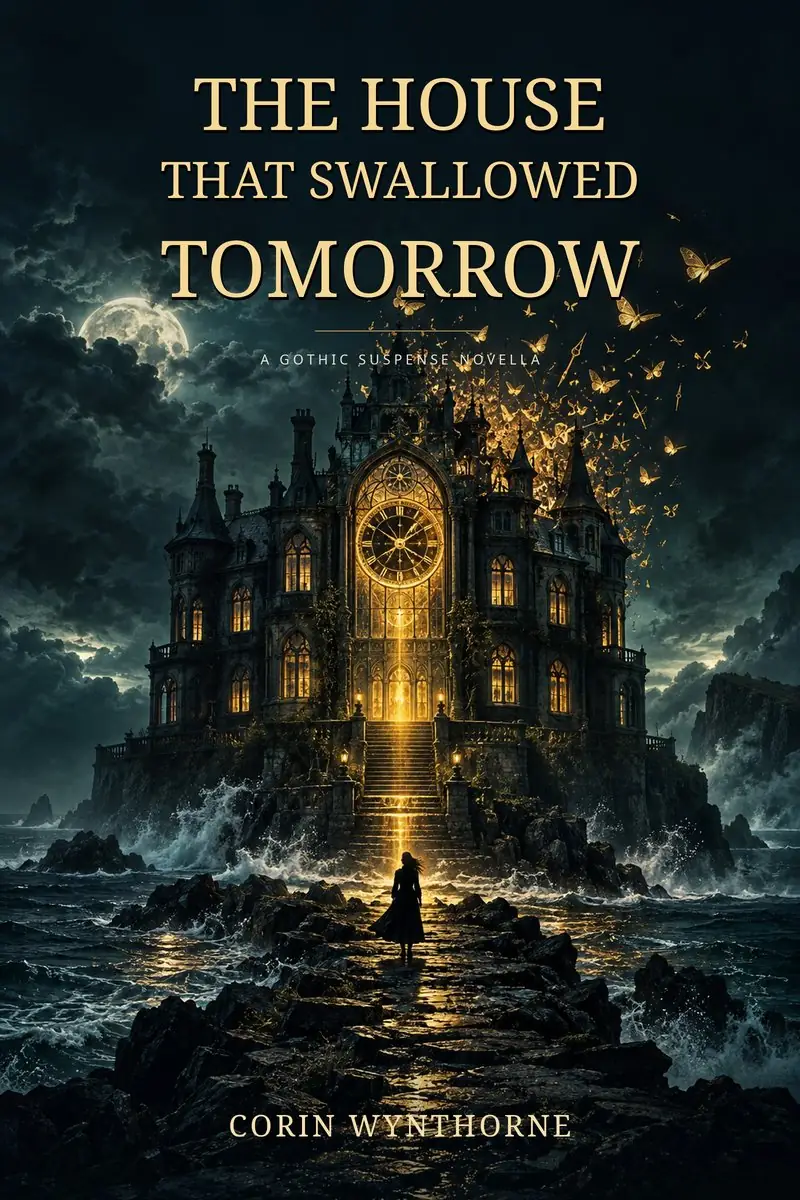
Some houses keep secrets. This one keeps the days you haven't lived. Mara Venn repairs broken clocks. She has spent twenty-two years refusing to return to the island house where her twin brother drowned. Then her aunt dies, leaving a key, a red notebook, and a warning: Do not let them tell you what you saw. On her first night home, Mara sees tomorrow's disaster in a bedroom window. When she prevents it, she discovers that Morrow House does more than predict the future. For generations, it has been buying the town extra time, and the people paying the price were never asked. Now a man with her brother's face is waiting behind the glass. A storm is closing the causeway. And the house has one last offer for the woman who knows how to mend its machinery. To bring her brother home, Mara must find a way to stop the clock without becoming its next keeper.
This book was AI-generated and editorially reviewed.
Read an excerpt
From the opening pages of the book.
The first thing Mara Venn noticed about the house was that someone had lit the room in which her aunt had died.
She stood at the end of the causeway with her suitcase between her boots. Across the water, Bellwether's harbor lamps were coming on. The tide made a sucking sound beneath the stones. Morrow House had always looked too large for its island, as if the rock had shrunk beneath it while everyone slept.
A light burned on the second floor. A woman sat beside it with her back to the window.
Mara looked at the letter in her hand. Ada Venn had died on Tuesday. The letter was dated Wednesday. It had reached Mara's workshop that morning, along with a key wrapped in a page from a tide table.
Her aunt's handwriting had weakened, but not enough to excuse its final sentence.
Do not let them tell you what you saw.
The woman lifted a hand to her hair. Mara recognized the movement before she recognized anything else: her own habit of pushing a loose strand behind her ear with the back of her wrist when both hands were dirty.
Then the light went out.
She might have gone back to the station if the last train had not already left. Later, she would despise this explanation. People entered dangerous places for small, sensible reasons. They were tired. It was raining. Their bags were heavy.
At the front door the key turned easily. The hall smelled of coal dust and beeswax. Forty clocks hung on the walls. None was running.
An envelope lay beneath a brass candlestick.
Mara,
The sheets are clean. There is soup in the freezer. You will think this is an elaborate way of making you come home. I wish it were.
Do not wind a clock before reading the red book.
If someone knocks after eleven, ask them the date.
I am sorry about the hand.
Ada.
Mara put her own left hand flat on the hall table. The little finger would not straighten completely. She had broken it at twelve, in the same accident that had taken her brother. Ada had set the splint herself because the road was flooded and the doctor could not cross.
Twenty-two years later, her aunt was still apologizing for it.
The red book was on the kitchen table. Mara did not open it immediately. She took off her wet coat, checked the back door, and found the freezer, where four square containers were labeled SOUP. Ada had been a practical woman, with the exception of the last three lines of everything she wrote.