


Murder in the Margins
- Ebook
- Audiobook
$3.99 (ebook)
Released 8 Nov 2026
Listen to the audiobook
About this book
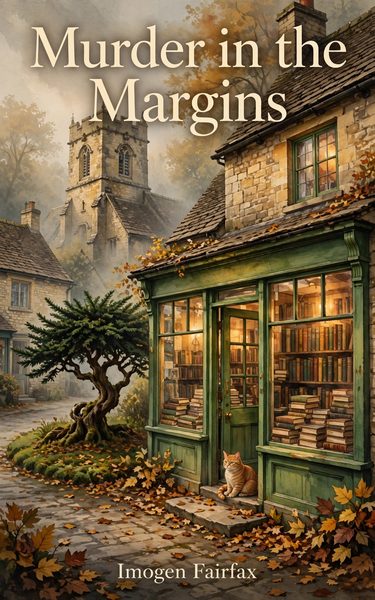
In the sleepy Cotswolds village of Little Bramley, nothing ever happens — until the morning after the Harvest Supper, when property developer Hugo Pemberton is found dead in the village hall. He had spent six months threatening to fell the village's four-hundred-year-old yew tree and build luxury flats on the grazing meadow, and he had made an enemy of nearly everyone in the village. The cordial he drank was poisoned with yew berries — from the very tree he wanted to destroy. Mabel Finch, seventy-one, retired headmistress and owner of the second-hand bookshop The Dusty Jacket, is determined to clear the name of Daisy Hart, the young waitress who served the fatal drink. Mabel has a gift no detective can match: after forty years of reading the village's handwriting in parish magazines and post-office notices, she recognises it the way other people recognise faces. Following a trail of torn parish records, a dead man's notebook, and a single note written in the margin of an old book, Mabel must unmask the killer before the village tears itself apart.
This book was AI-generated and editorially reviewed.
Read an excerpt
From Chapter 1 — The Dusty Jacket — the opening of the book.
The first thing Mabel Finch did every morning was argue with the bell over the door of her bookshop. It had hung there for eleven years, ever since she had taken over The Dusty Jacket from old Mr. Abernathy, and in all that time it had never once rung properly. It gave a small, apologetic cough instead of a chime, as if it were embarrassed to announce anyone at all. Mabel had oiled it, tightened it, threatened it, and once — in a moment she did not care to remember — spoken to it quite sharply. The bell remained unmoved. It coughed. Mabel, being a practical woman, had decided to love it for its faults.
She unlocked the door on a golden September morning, and the village green lay before her like something out of a postcard that had been left in the sun too long. The chestnut trees were just beginning to turn. A thin mist curled off the River Bram. Somewhere down the lane, Bert Wilkins was hauling barrels into The Woolpack, and the smell of woodsmoke drifted from a cottage chimney. Little Bramley, in the Cotswolds, on a morning like this, was the sort of place people wrote about in letters home and then quietly decided never to leave.
"Morning, Biscuit," Mabel said, as the ginger cat uncurled himself from the biography shelf and stretched with great ceremony. "You slept on Disraeli again. I hope you dreamt of something improving."
Biscuit blinked at her with the slow contempt of a cat who has heard this joke before, and jumped down to inspect the new box of donations by the counter. Mabel put the kettle on in the back room, opened the shutters, and set about the pleasant business of the day: shelving books.
The Dusty Jacket was not a large shop, and that was precisely its charm. Three rooms of second-hand books, floor to ceiling, smelling of old paper and beeswax. The front room held fiction, arranged by Mabel with a librarian's rigour and a schoolteacher's sense of mischief — the detective novels had their own corner, marked with a hand-painted sign that read For Readers of a Suspicious Disposition. The middle room was history and biography, where Biscuit held court. The back room, coldest and dustiest, was where the donations waited to be sorted, priced, and — Mabel's favourite part — read.
Because the books that came into The Dusty Jacket were never just books. They had lived in other people's houses. They had been read in armchairs and on trains and in hospital waiting rooms. And very often, they had been written in.