


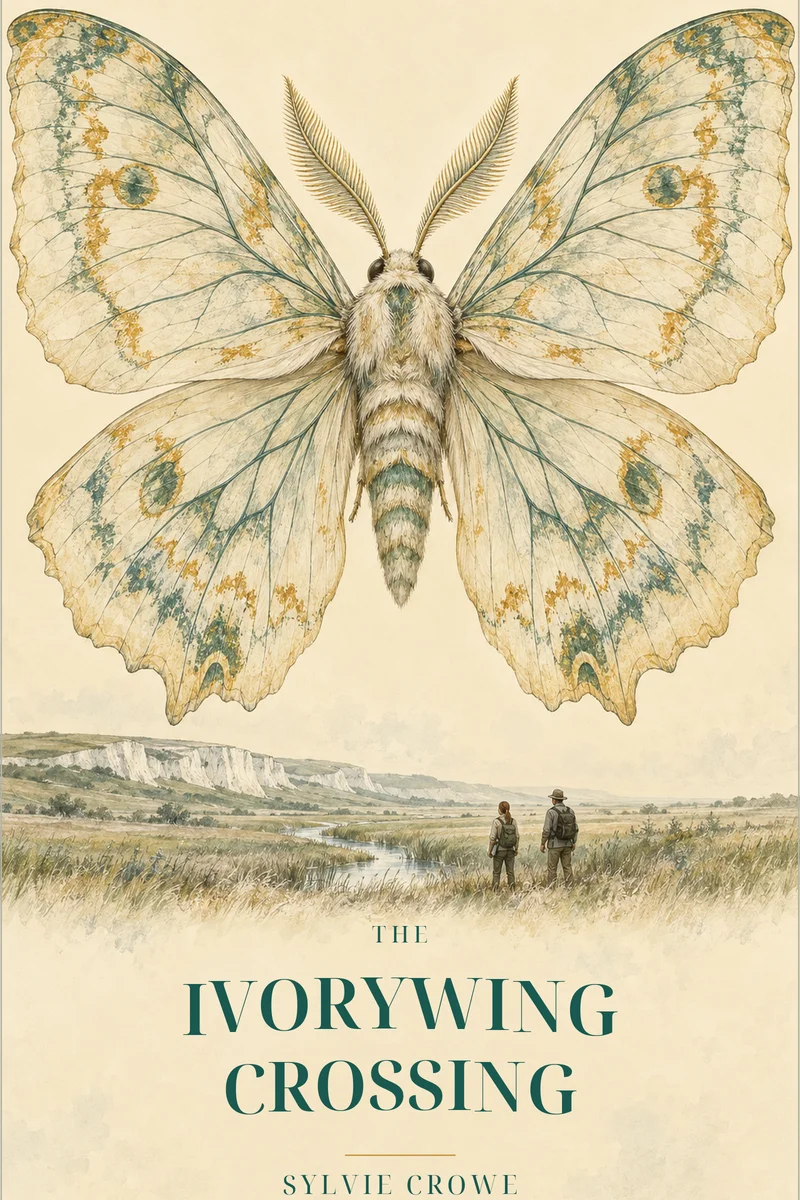

Where the Clocks Disagree
- Ebook
- Audiobook
$2.99 (ebook)
Released 15 Nov 2026
Listen to the audiobook
Follow on BookBub →
Get an email when the next book is out
About this book
Nine stations. Nine speeds of time. One brother who stopped. For eleven years Ilse Varga has written to her brother Teo in the Lull, a strip of steppe where time runs slow. A day there is forty days outside. He has lived three months. She has lived a marriage and its end, and has watched their mother forget his face. Now the doctors give their mother six weeks, and every sunrise Ilse crosses on the way in is another day gone from that number. She has ninety minutes in the last town before the only train home leaves. What she finds in her brother's logbook is worse than a missed goodbye. Something under the world is moving, and only the two of them can prove it.
This book was AI-generated and editorially reviewed.
Read an excerpt
From PART ONE: THE QUICK SIDE — the opening of the book.
Local Day 12. The sun here is not a sun. It is a bright smear that goes over the roof so fast I have stopped looking at it. Mirela says you stop looking after the first week. I stopped after four days, so I am either quick or a coward. Tell Mamma I am eating. She will ask.
Teo
The letter came on a Tuesday, in the ordinary way, folded into the monthly bundle from the Line Office. Ilse Varga found it at the bottom of her bag when she reached the hospice, under a bruised pear and her mother’s second-best cardigan.
She did not open it in the corridor. She had learned, over eleven years, that letters from her brother were not for corridors. They were for kitchen tables and long evenings, for the hour after the dishes. She carried it past the nurses’ station with its smell of boiled coffee and disinfectant, past the window that looked out on the car park and the three sad cherry trees, and into Room 14, where her mother was sitting up in bed pretending to be asleep.
“I can hear you thinking,” said Marta Varga, without opening her eyes.
“I’m not thinking. I’m walking.”
“You walk like a person who is thinking. Heel, heel, heel. Like a clock that has been told a secret.” Her mother opened one eye. It was still a sharp gray, the gray of a tuning fork. “Did you bring the pear?”
“I brought the pear.”
“Then you’re forgiven.”
Ilse sat. She peeled the pear with the small knife the nurses allowed, and cut it in pieces, and her mother ate them one at a time with the grave attention she had once given to the strings of other people’s pianos. For forty years Marta had gone from house to house in Orvane with a leather roll of felt and wedges and a tuning lever, and she had listened to rooms. Now she listened to the long corridor outside, and to the trolley, and to Ilse’s breathing, and she seemed satisfied with all three.
“Where’s your brother?” she said.
It was the question. It came in some form every day, and every day Ilse had a small set of answers, worn smooth as pebbles. At work. In the north. Out of range. She had once tried the truth, in the first year of the illness, when her mother’s mind was still mostly her own, and Marta had said, quite calmly, “Oh, yes, the Lull,” and then asked whether the boy had packed warm socks. Within an hour she had forgotten. Ilse never again offered the truth. It was cruel to make a person grieve the same loss twice a day.